ABS Automated Bleed Procedure With Pressure
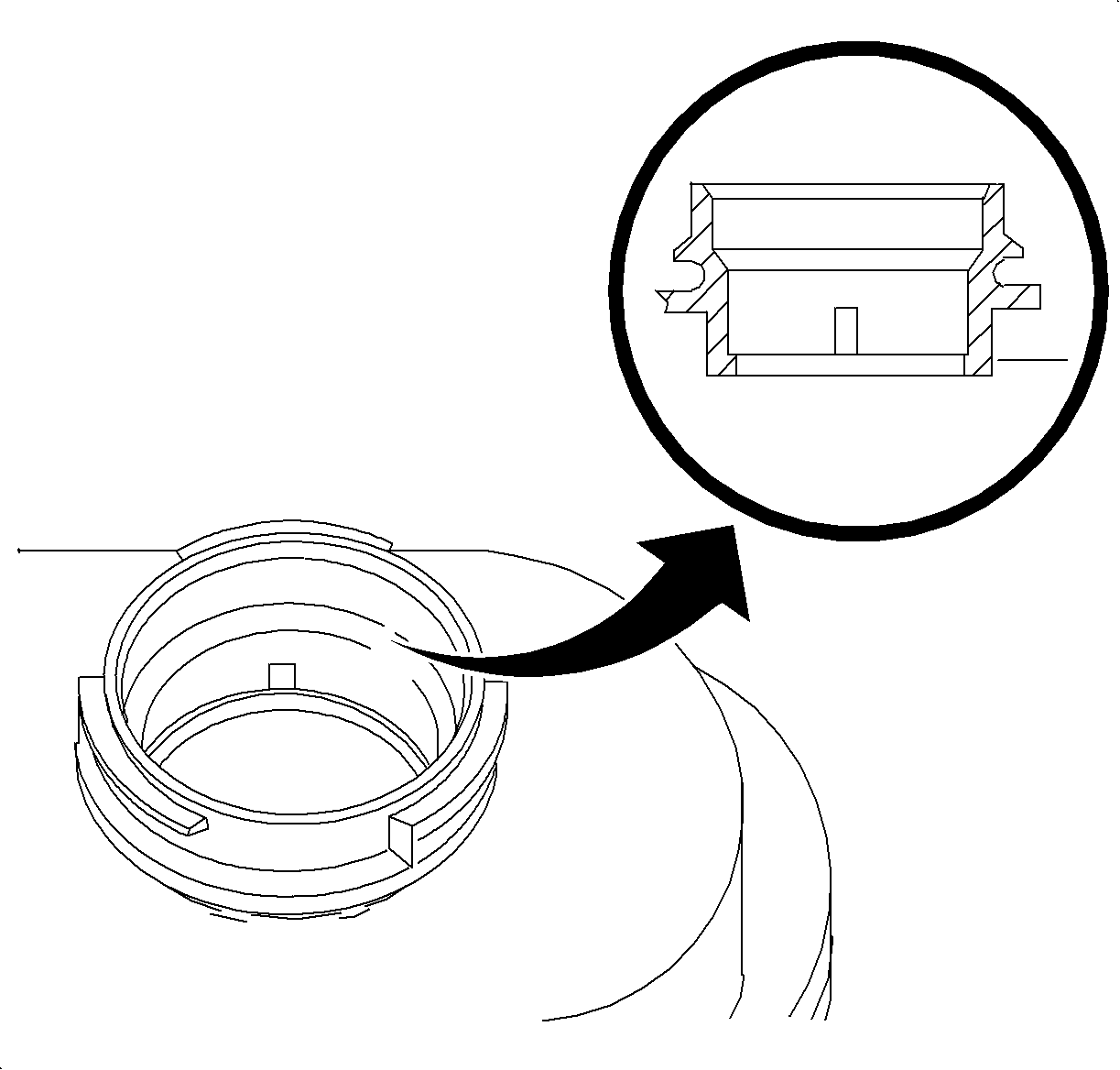

Notice
Use only DOT 3 brake fluid from a clean, sealed container. Do not use any fluid
from a container which is wet with water. Do not use DOT 5 silicone fluid.
Notice
Pressure bleeding equipment must be of the diaphragm type. It must have a rubber
diaphragm between the air supply and the brake fluid to prevent air, moisture, and
other contaminants from entering the hydraulic system.
Important
Prior to bleeding the rear brakes, the rear displacement cylinder pistons must
be returned to the top most position or HOME. To return the pistons to home (top most
position), use the PDT, or equivalent to perform SPECIAL TEST, RUN ABS MOTORS, PISTON
UP-HOME. This test will run the piston to the top of their travel.
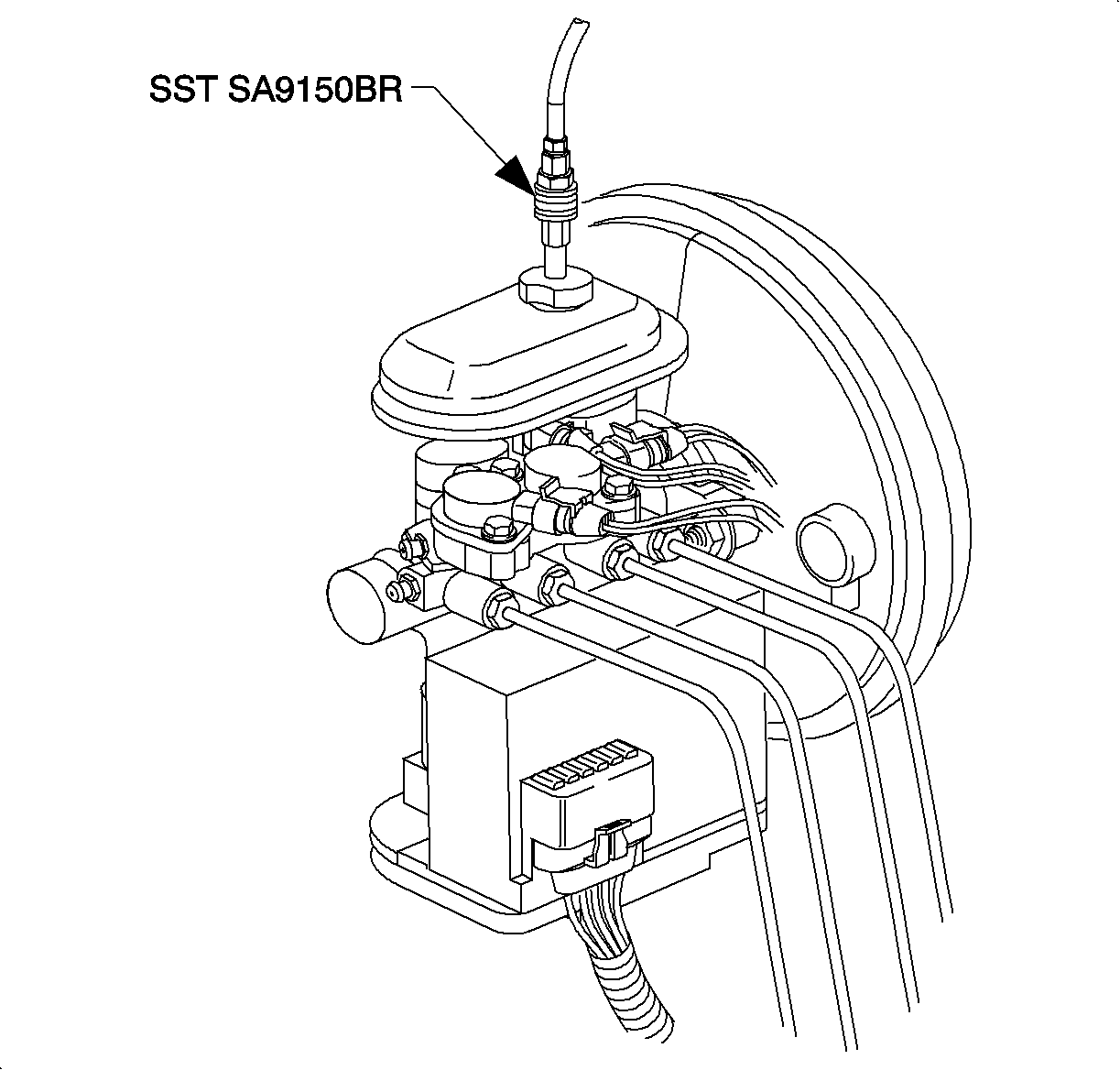
- Clean brake fluid reservoir cap and area around
cap. Remove cap.
- Fill the master cylinder reservoir with clean brake fluid and keep reservoir
at least one half full during the bleed operation.
- Install the bleeder adaptor SA9150BR (or equivalent) to the brake fluid
reservoir.
- Connect pressure bleeder to adapter.
- Charge pressure bleeder equipment to 207-242 kPa (30-35 psi).
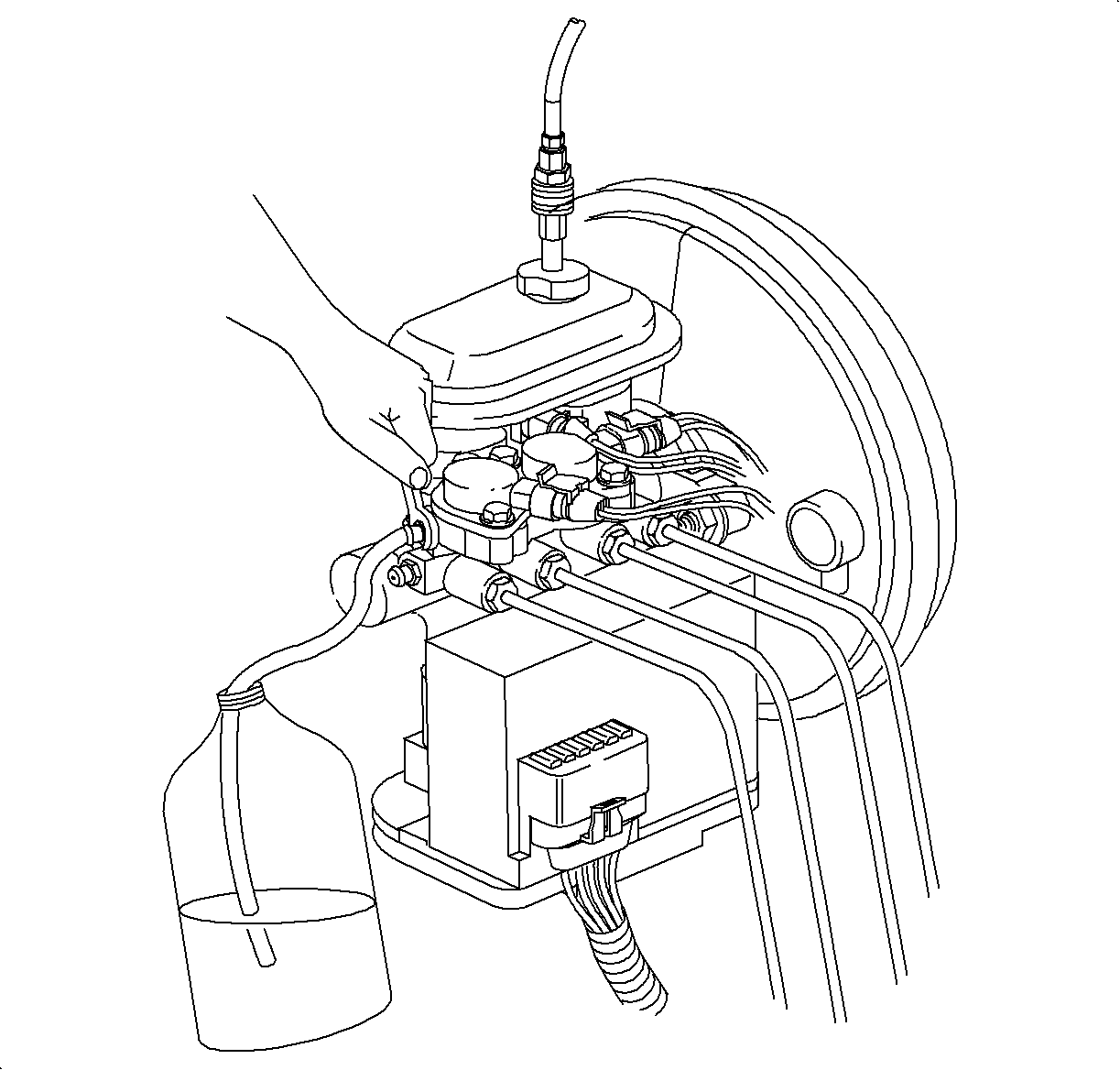
- Bleed brake modulator assembly:
- Attach a transparent tube over the rear modulator assembly bleeder valve
and allow the tube to hang submerged in a clean container partially filled with brake
fluid.
- Slowly open bleeder valve 1/2 to 3/4 turn and allow fluid to flow until
no air is seen in the fluid.
- Close the bleeder valve.
Tighten:7 N·m (62 lb in)
- Repeat steps 6.1 to 6.3 for the front modulator assembly bleeder valve.
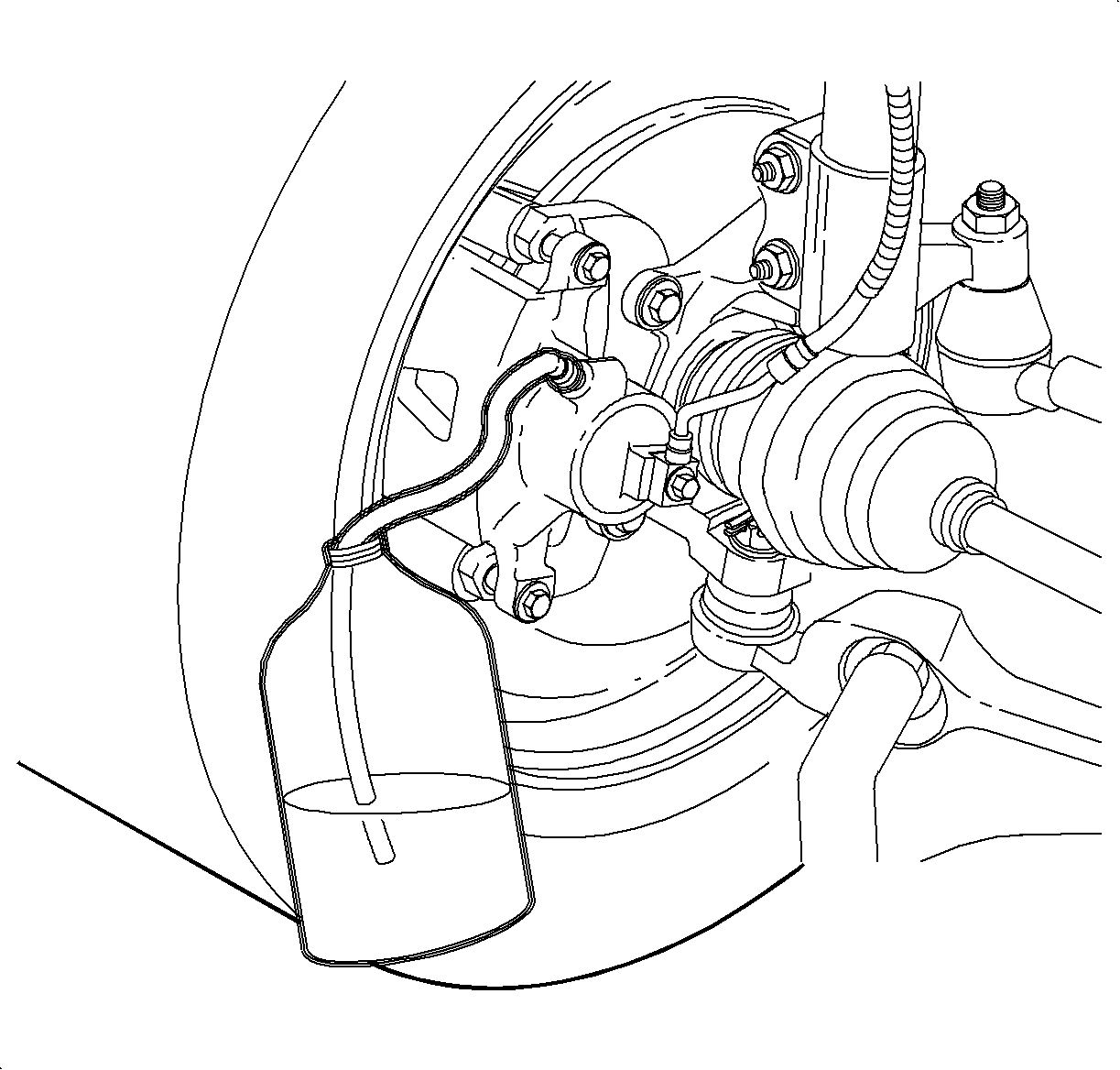
- Bleed the calipers (and wheel cylinders if vehicle
has rear drum brakes) in the following order.
- A. Right rear
- B. Left rear
- C. Right front
- D. Left front
- Attach a transparent tube over the caliper assembly bleeder valve and
allow the tube to hang submerged in a clean container partially filled with brake
fluid.
- Open bleeder valve 1/2 to 3/4 turn and allow fluid to flow until no air
is seen in the fluid.
- Close bleeder valve.
Tighten:11 N·m (97 lb in)
Tighten:7.5 N·m (66 lb in)
Important
To assist in freeing entrapped air, tap lightly on caliper casting with a rubber
mallet.
- Repeat step 7.1 through 7.3 for each wheel in the order specified above, until
no air is present in any brake lines.
- Check the brake pedal for firm constant feel and travel both with the
engine Off (ignition On) and with the engine running.
If pedal feel is firm and constant and travel is not excessive, go to step 9.
If pedal feel is not firm and constant or travel is excessive.
- Use PDT, or equivalent to RUN ABS MOTORS, PISTONS UP-HOME and PISTONS
DOWN-REL two times.
- Use scan tool, home pistons.
- Start engine and let it run for two seconds after the ABS light goes out.
- Turn Off engine.
- Repeat steps 8.3 and 8.4 nine more times.
- Bleed entire brake system again.
- Check for leaks with engine running and brakes applied.
- Road test the vehicle.
- Make several normal (non-ABS) stops from a moderate speed.
- Make one to two ABS stops from a higher speed at approximately 80 km/h
(50 mph).
- After road testing the vehicle, it is recommended that the system be bled
again following the steps 1 through 7 and then inspected again. If after inspection
the pedal feels firm and constant and pedal travel is not excessive, system is properly
bled.