richpin06a Front Stabilizer Bar Replacement.

Caution
Ensure that the vehicle is properly supported and squarely positioned.
To help avoid personal injury when a vehicle is on a hoist, provide additional support
for the vehicle on the opposite end from which the components are being removed.
- Raise
the vehicle on a hoist with the steering in an unlocked position.
- Remove the left wheel and tire.
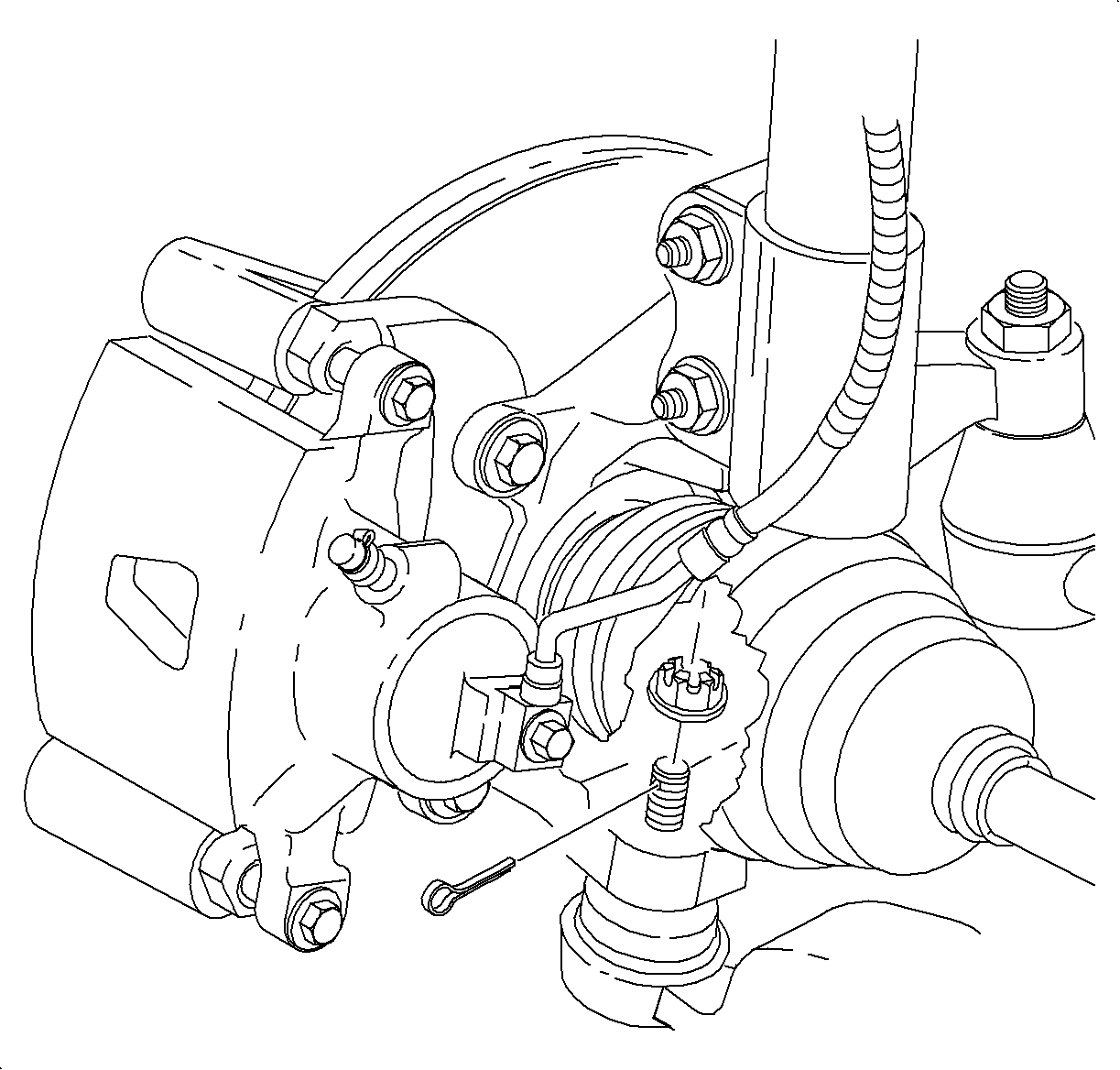
- Remove and discard the left lower control arm ball stud cotter pin.
Notice
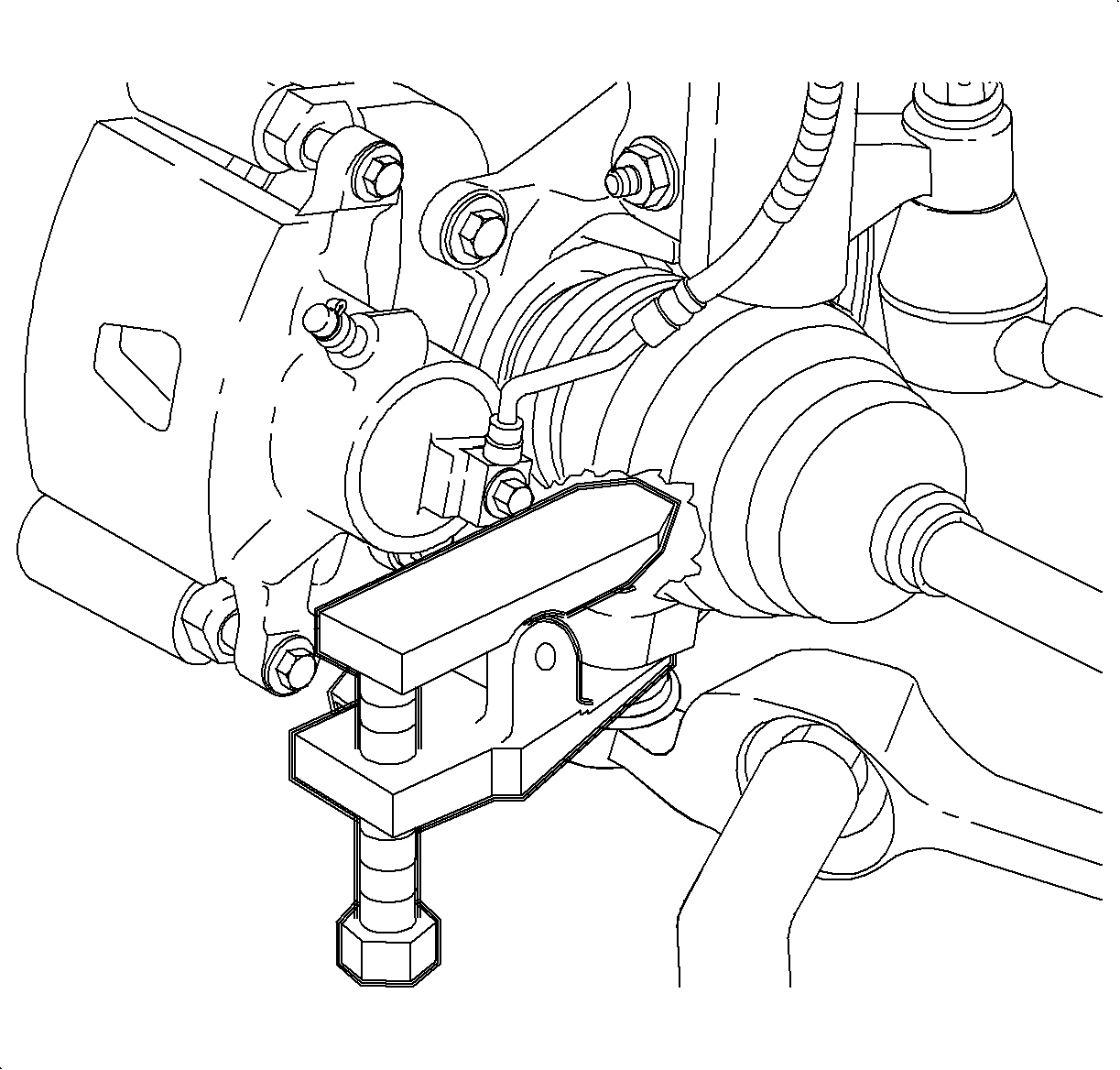
Do not attempt to separate the joint using a wedge-type tool because seal may
be damaged.
Notice
Care must be taken to prevent damage to the speed sensor ring on ABS vehicles.
Minor surface damage to the speed sensor ring can result in ABS system malfunctions.
- Loosen (do not remove) the left lower control arm
ball stud castle nut, until the top of the castle nut is level with the top of the
ball stud.
- For left side of vehicle, use
SA9132S
(or equivalent) to separate the lower control arm from the knuckle.
- For left side of vehicle, remove the lower control
arm ball stud castle nut.
Important
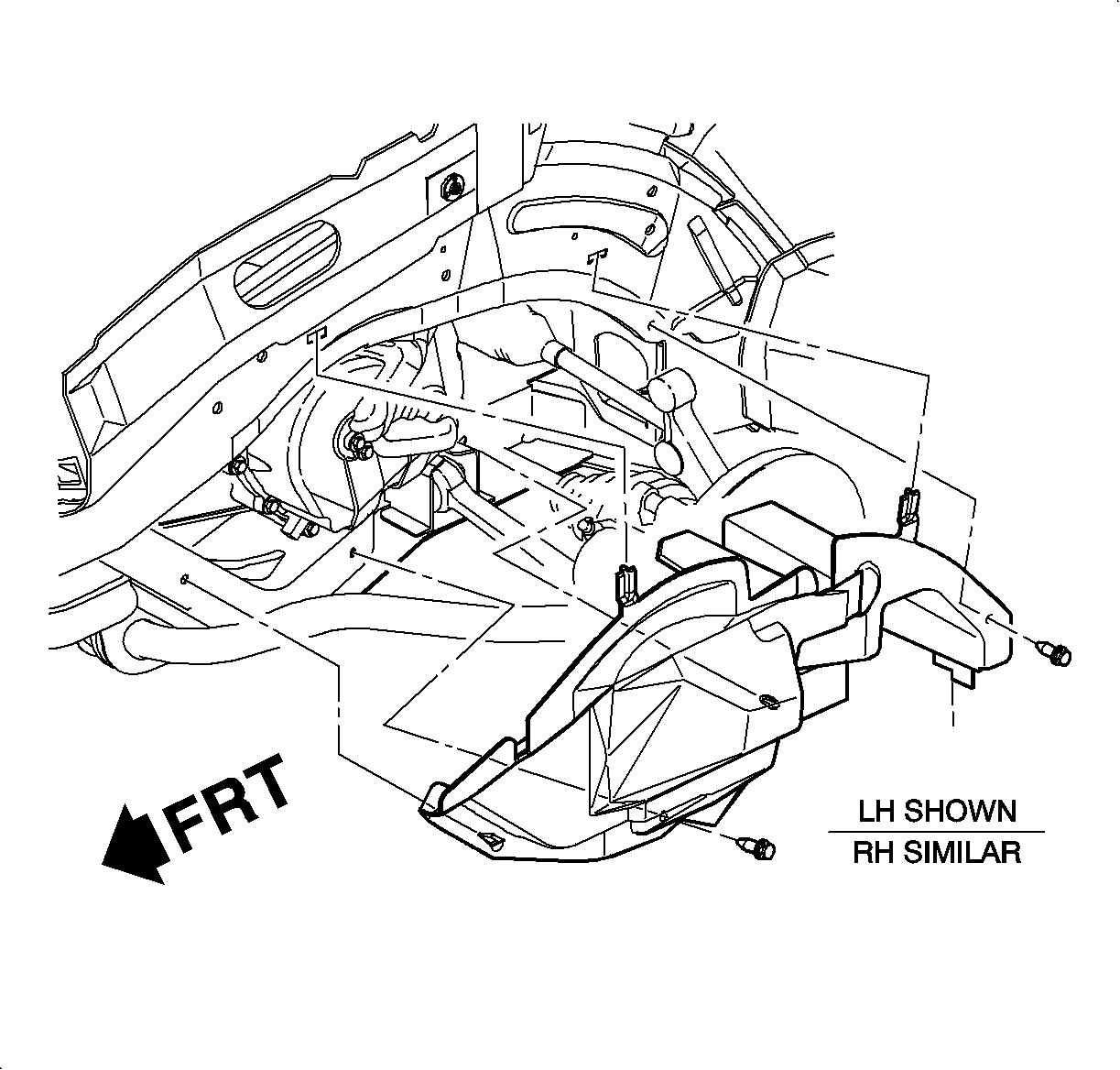
Remove the front section of the splash shield first, then the rear.
- Remove the left side splash shield.
- Remove the 2 push pins.
Important
If the molded-in fasteners are damaged or broken, drill out with a 5/16-in.
bit and replace with a push pin.
- Remove the lower shield to cradle the molded-in fasteners at the cradle by gently
prying at the 3 fastener locations.
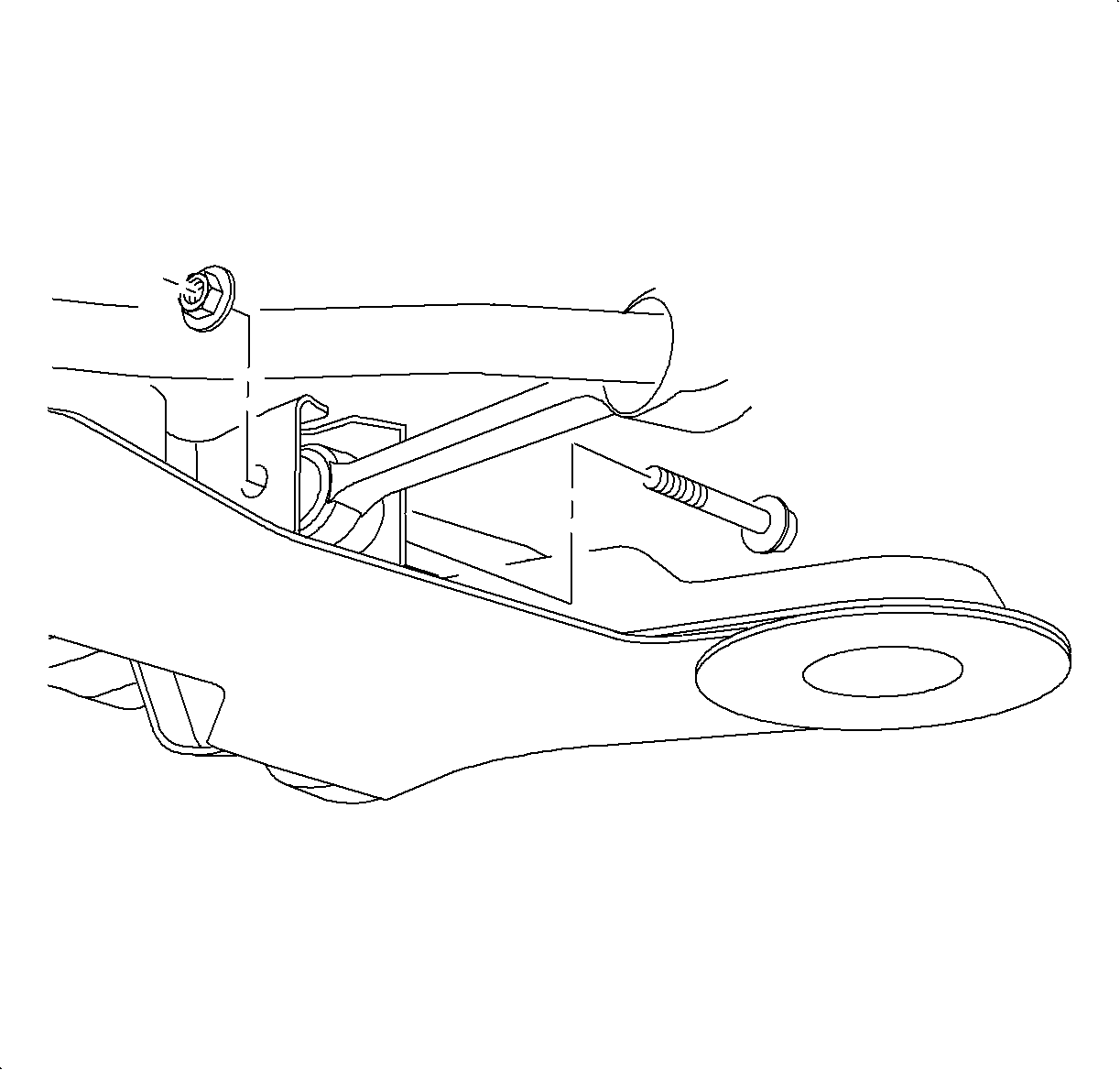
- For the left side of vehicle, remove the lower
control arm-to-cradle fastener.
Important
The front wheels should be turned to the left to allow access to the nut.
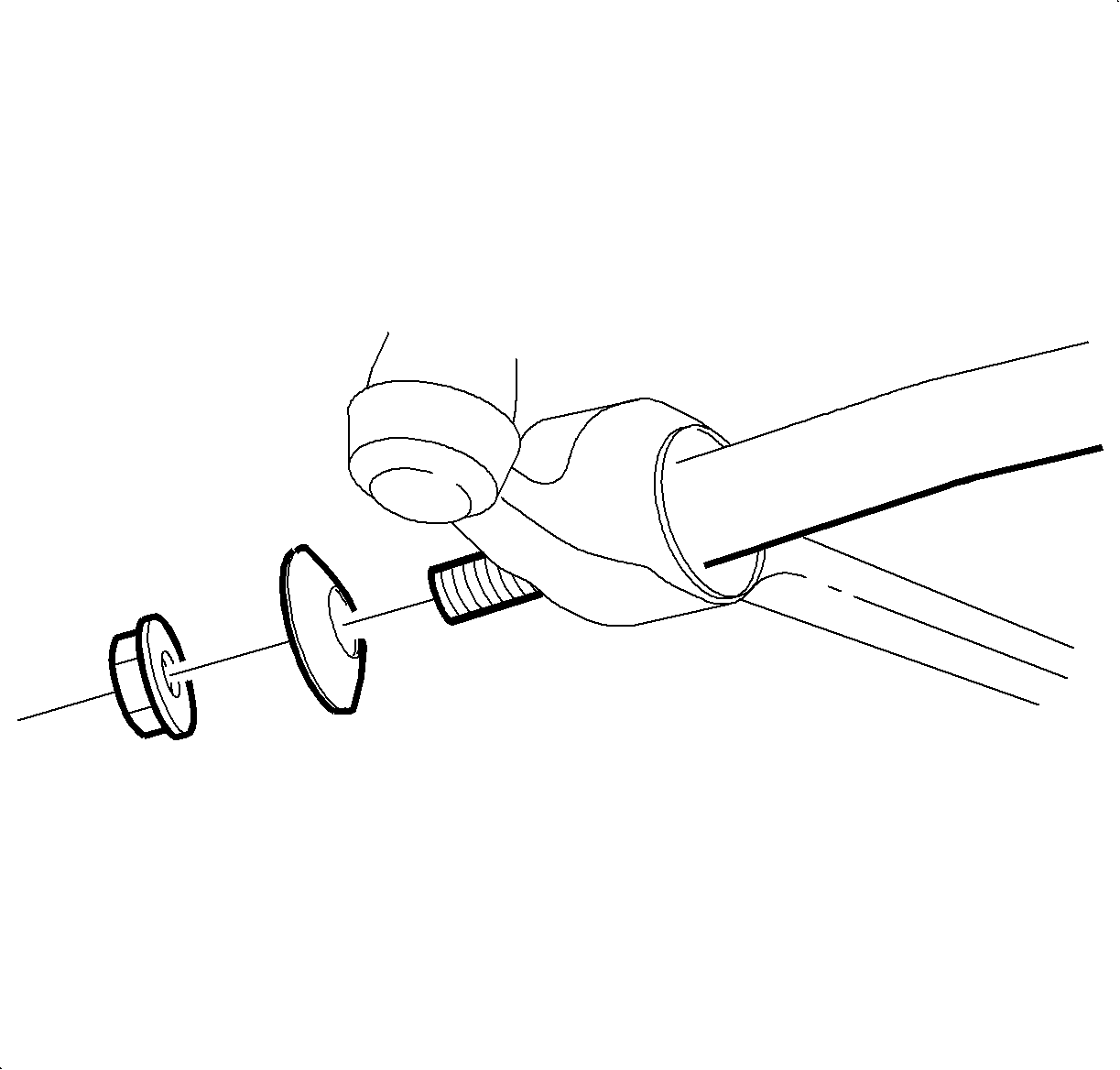
- For right side of vehicle, remove the front stabilizer shaft-to-lower control
arm nut and washer.
Important
If the front stabilizer-to-cradle strut nut becomes damaged due to corrosion,
cross-threading, etc., or is broken loose from the cradle, it can be replaced using
the following procedure:
- Remove the front stabilizer shaft-to-cradle mounting bracket fasteners.
-
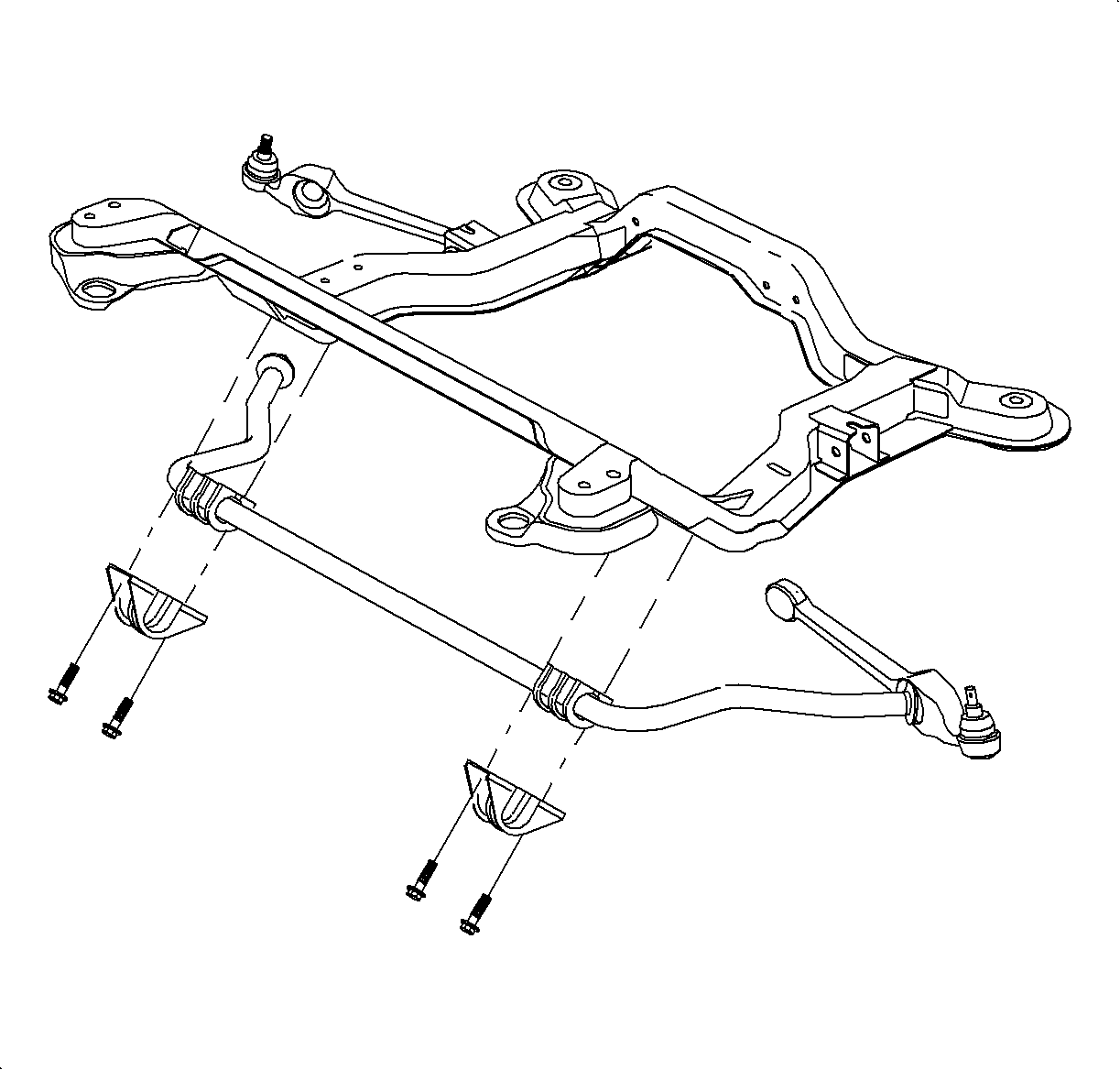
If the nut is broken loose from the cradle and
the bolt is locked in the nut, proceed to steps 10.3, 10.4, and 10.5.
- If nut is not broken loose from cradle, but is damaged and the bolt is
removed:
- Distort the threads of the service bolt sufficiently to cause the bolt
to lock into the nut.
- Install the bolt, and using an air impact wrench, continue turning the
bolt until the nut is broken loose from the cradle.
- Cut off the bolt head.
- Retrieve the bolt shank and nut from the cradle cavity.
- Install the new bolt (P/N 21010823) and repair the nut (P/N 21006321).
- Remove the front stabilizer shaft (with left control arm) from the vehicle.
- Remove the left control arm-to-front stabilizer shaft nut and washer from
the front stabilizer shaft.
- Remove the left control arm from the front stabilizer shaft.
Important
Do not tighten the fasteners at this time.
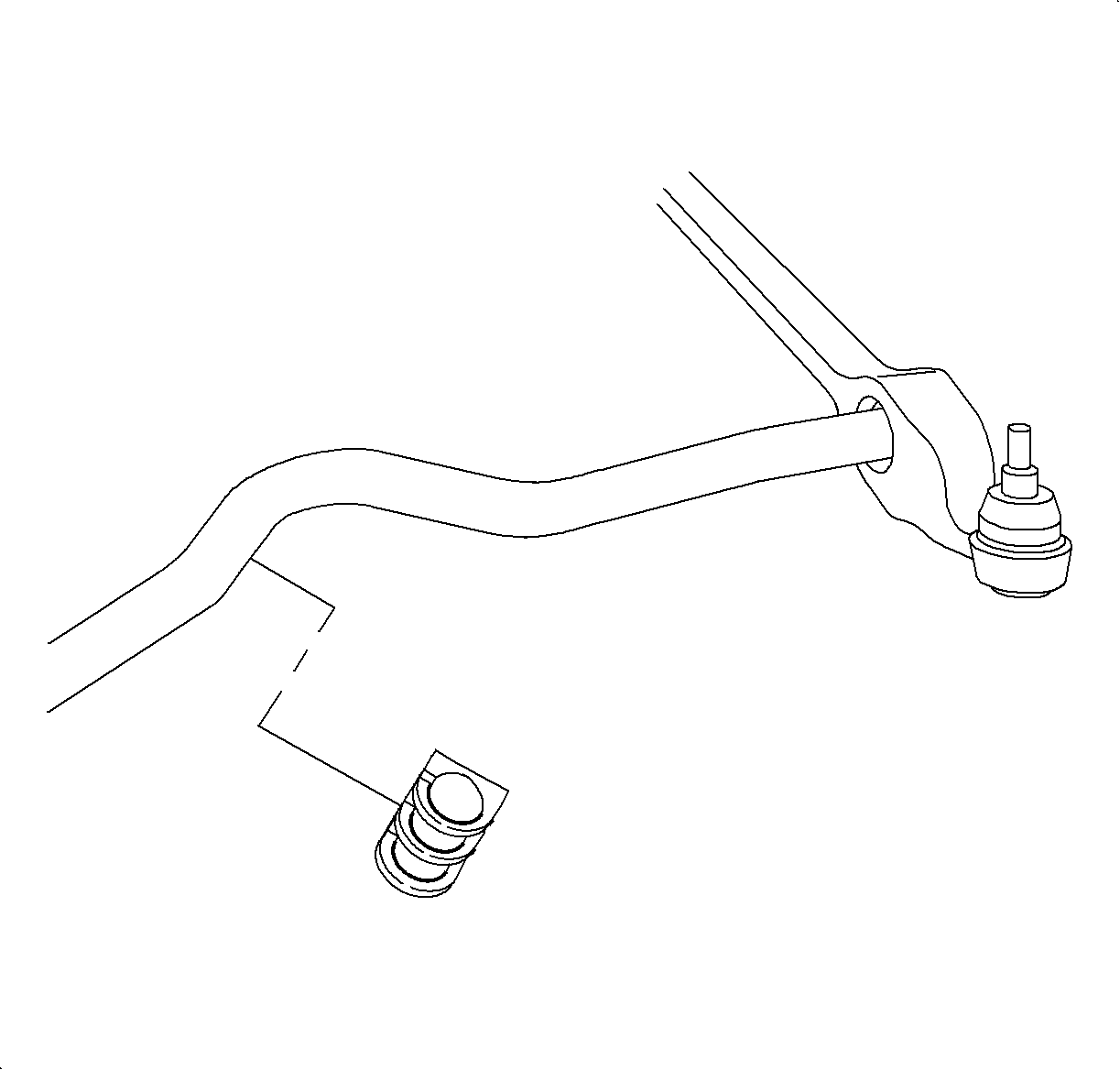
- With the front stabilizer shaft off of vehicle, position the left control arm
onto the front stabilizer shaft with the washer and nut.
Important
The front stabilizer shaft-to-cradle bushings must be positioned in the attachment
brackets with their installation slits facing toward the front of the vehicle.
- Install the front stabilizer shaft-to-cradle bushings onto the front stabilizer
shaft.
- Position the right end of front stabilizer shaft into the right control
arm (on vehicle).
Important
Do not install the fasteners at this time.
- Position the left control arm into the frame.
Notice
Refer to Fastener Notice in Cautions and Notices.
Important
New bolts or Loctite 242® (or equivalent), must be installed.
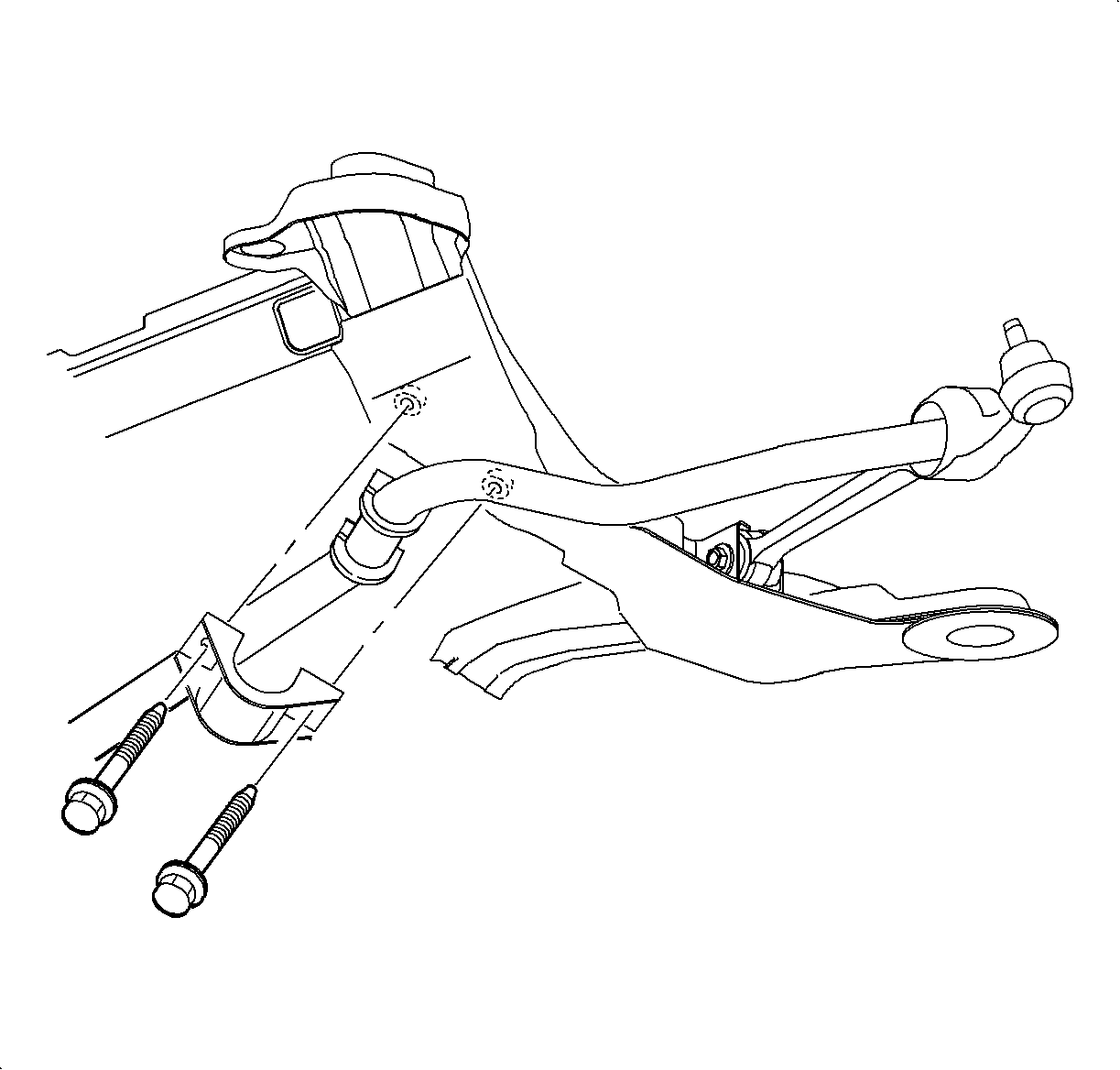
- Install the front stabilizer shaft attachment brackets to the frame with the
fasteners and tighten.
TightenTighten the Front Stabilizer Shaft Attachment Bracket-to-Frame to 140 N·m
to (103 lb ft).
- Tighten the front stabilizer shaft-to-cradle fasteners a second time.
TightenTighten the Front Stabilizer Shaft Attachment Bracket-to-Frame to 140 N·m
(103 lb ft).
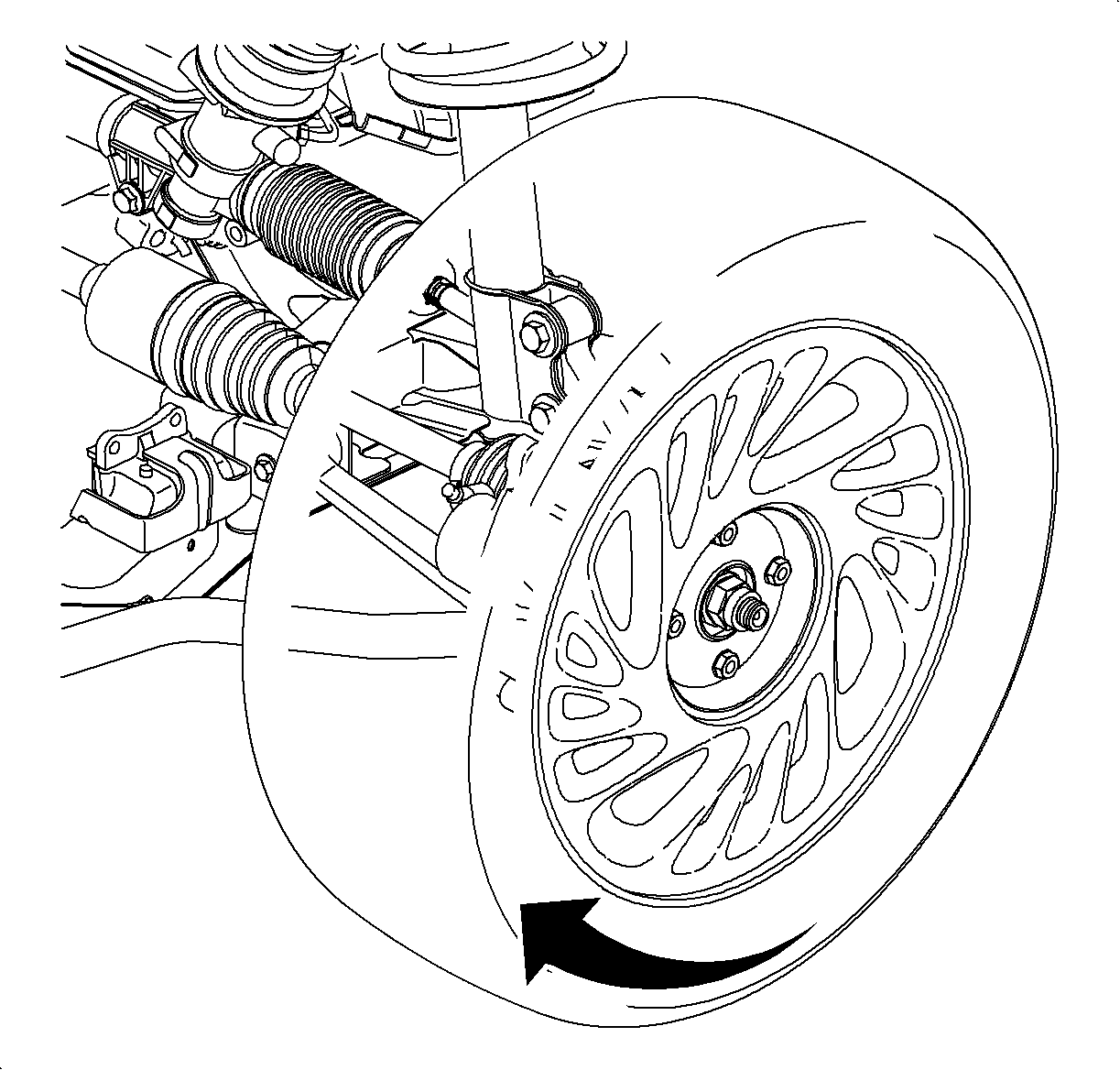
- Install the left road wheel onto the vehicle.
Important
Tighten the wheel fasteners, but do not torque at this time.
- With the aid of an assistant, push the bottom of the left road wheel into the
vehicle. This will move the left control arm into a position that will allow the
control arm to cradle the fastener to be installed.
- Install the left lower control arm-to-frame fastener.
TightenTighten the Control Arm-to-Frame Bolt to 125 N·m (92 lb ft).
TightenTighten the Control Arm-to-Frame Nut to 100 N·m (74 lb ft).
Important
Use new nut. Torque retention of the old nut may not be sufficient.
- Install the right control arm-to-front stabilizer shaft nut and washer and tighten
to specification.
TightenTighten the Control Arm-to-Front Stabilizer Shaft Nut to 144 N·m
(106 lb ft).
Important
Use new nut. Torque retention of old nut may not be sufficient.
Important
Lower control arm ball stud threads should be thoroughly cleaned and lubricated
before tightening the nut.
- Tighten the control arm-to-front stabilizer shaft nut to specification.
TightenTighten the Control Arm-to-Front Stabilizer Shaft Nut to 144 N·m
(106 lb ft).
Important
If necessary to rotate the castle nut to orient to hole in the stud, always
tighten the nut -- never loosen it.
- For the left side of vehicle, connect the ball stud to the steering knuckle
with the fastener.
TightenTighten the Ball Joint Stud Castle Nut to 75 N·m (55 lb ft).
- Install the new cotter pin.
Important
Install the rear section of the splash shield first, then the front.
- Install the left side splash shield.
- Install the tabs in the body cut-out.
Important
Make sure the splash shield flaps are tucked in at the body locations.
- Align the molded-in shield fasteners with the holes in the cradle. Push straight
in to install.
- Install the push pins.
Notice
Before installing wheels, remove rust or corrosion from wheel mounting surfaces
and brake rotors/drums. Failure to do so can cause wheel nuts to loosen in service.
- Position the wheel onto hub.
- Install the wheel nuts and tighten in a crisscross pattern. Repeat the
tightening pattern to make sure the torque is correct.
TightenTighten the Wheel Nuts to 140 N·m (103 lb ft).
- Lower the vehicle from the hoist.
- Perform a vehicle wheel alignment. Refer to
Wheel Alignment Specifications