Recovering, Evacuating, and Charging the A/C System
Caution
Never charge the a/c system through the high pressure side of the system. Component
damage and personal injury could result.
Notice
Never use alcohol to remove moisture from the refrigeration system.
Damage to the system components could occur.
If the system has been opened for any repair, or the R-134a charge lost, the
system must be evacuated prior to charging.
Evacuation and charging is a combined procedure and all gage lines must be
purged with R-134a prior to charging.
A/C System R-134a Recovery
-


Before removing or replacing any of the AC refrigerant
lines or components, the refrigerant must be completely recovered.
-
Important
Verifying the purity of the refrigerant with a refrigerant purity identifier
before recovery is recommended.
The refrigerant system must be discharged using an air conditioning refrigerant
recovery and recycling system. Follow the manufacturer's operating instruction for
the system being used.
-
Notice
The air conditioning refrigerant and recycling station must meet UL standards
for moisture and contamination removal. Recovery systems which cannot meet these standards
are not approved for warranty repairs. Reuse of moisture or particulate contaminated
refrigerant will result in premature compressor and other component failure.
Notice
Failure to check for residual oil from the previous recovery can result in adding
extra oil to the vehicle currently being serviced. This will also result in insufficient
oil in the system previously worked on and could possibly contribute to premature
compressor failure.
Always check the
A/C system for pressure with a manifold gage set to determine if refrigerant is present
in the system. Performing recovery on an A/C system which is open to atmosphere, as
a result of a leak, would allow the recovery station to pull only air into the tank.
Evacuating The System
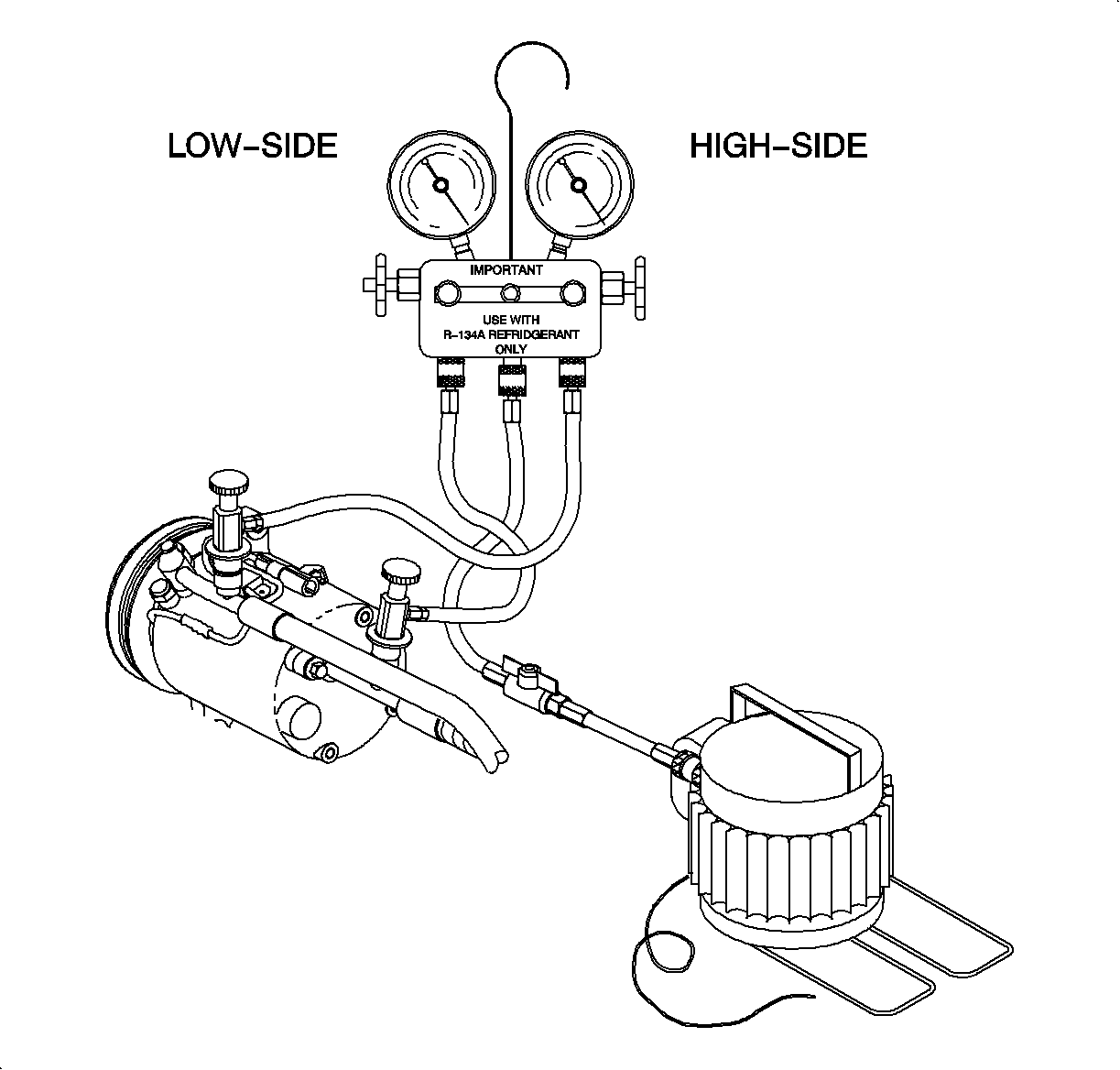
- Connect the manifold gage set and vacuum pump
to high and low side service ports. Turn on the vacuum pump and slowly open the high
and low side service valves to the pump. Allow the system to evacuate for 20-30 minutes.
Note the vacuum gage reading.
- Close the high and low side service valves. Shut off the vacuum pump.
- Watch the low side gage for vacuum loss for one to three minutes.
Charging The A/C System
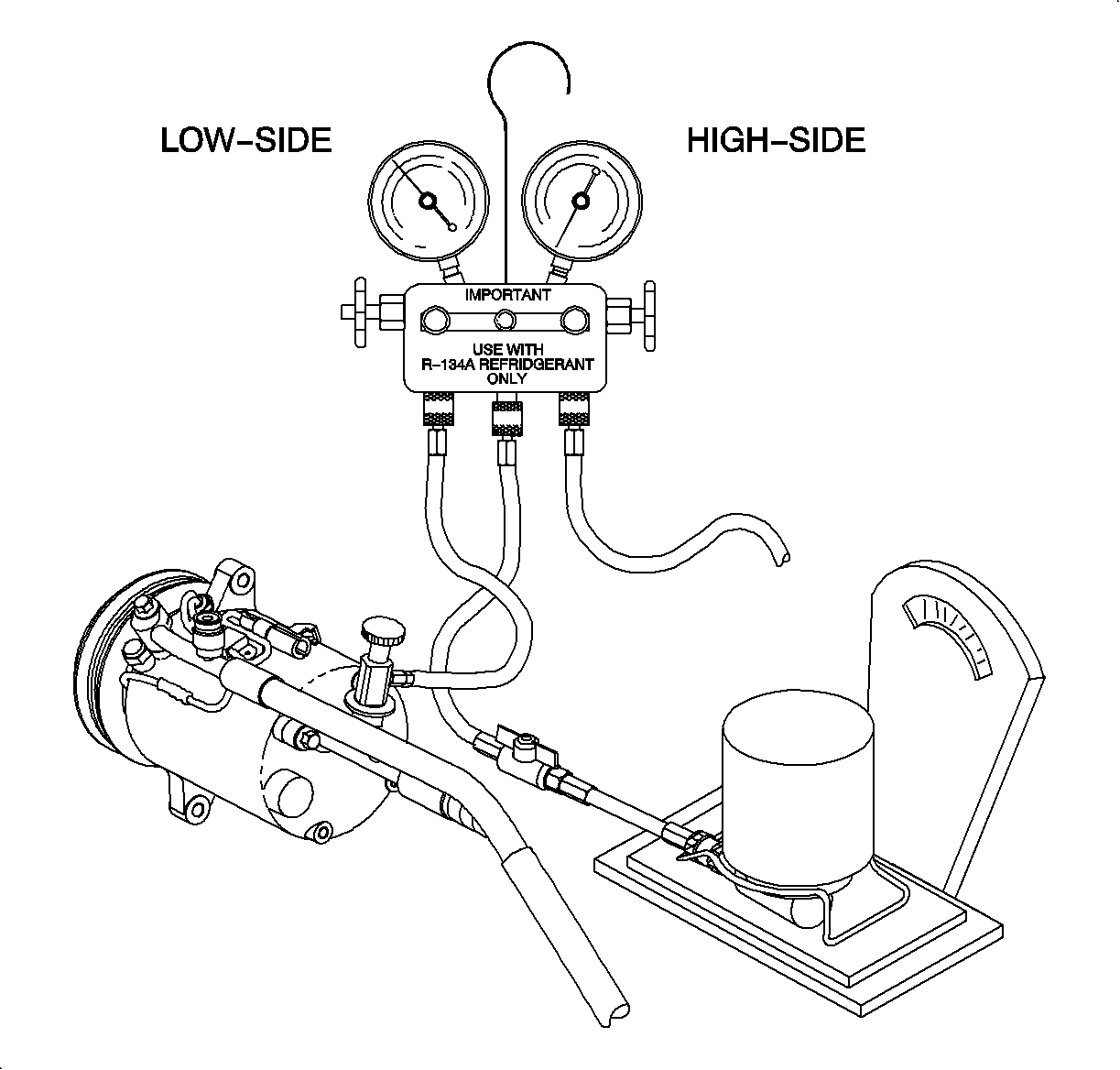
- Open the R-134a source valve(s) and allow 0.50 kg
(1 lb) of liquid R-134a to flow into system through low side service fitting.
- As soon as 0.50 kg (1 lb) has been added to system, start
the engine, set the mode control to vent, the temperature lever to full cold, the
blower speed on high, and push the A/C compressor button to the On position (A/C
control button light On). Slowly draw in the remainder of the refrigerant charge 0.23 kg
(0.5 lb). The total system charge is 0.68 kg (1.5 lbs).
- Turn off the refrigerant source valve and run the engine for 30 seconds
to clear the lines and gages.

- With the engine running, remove the low side
service valve from the suction pipe service port.
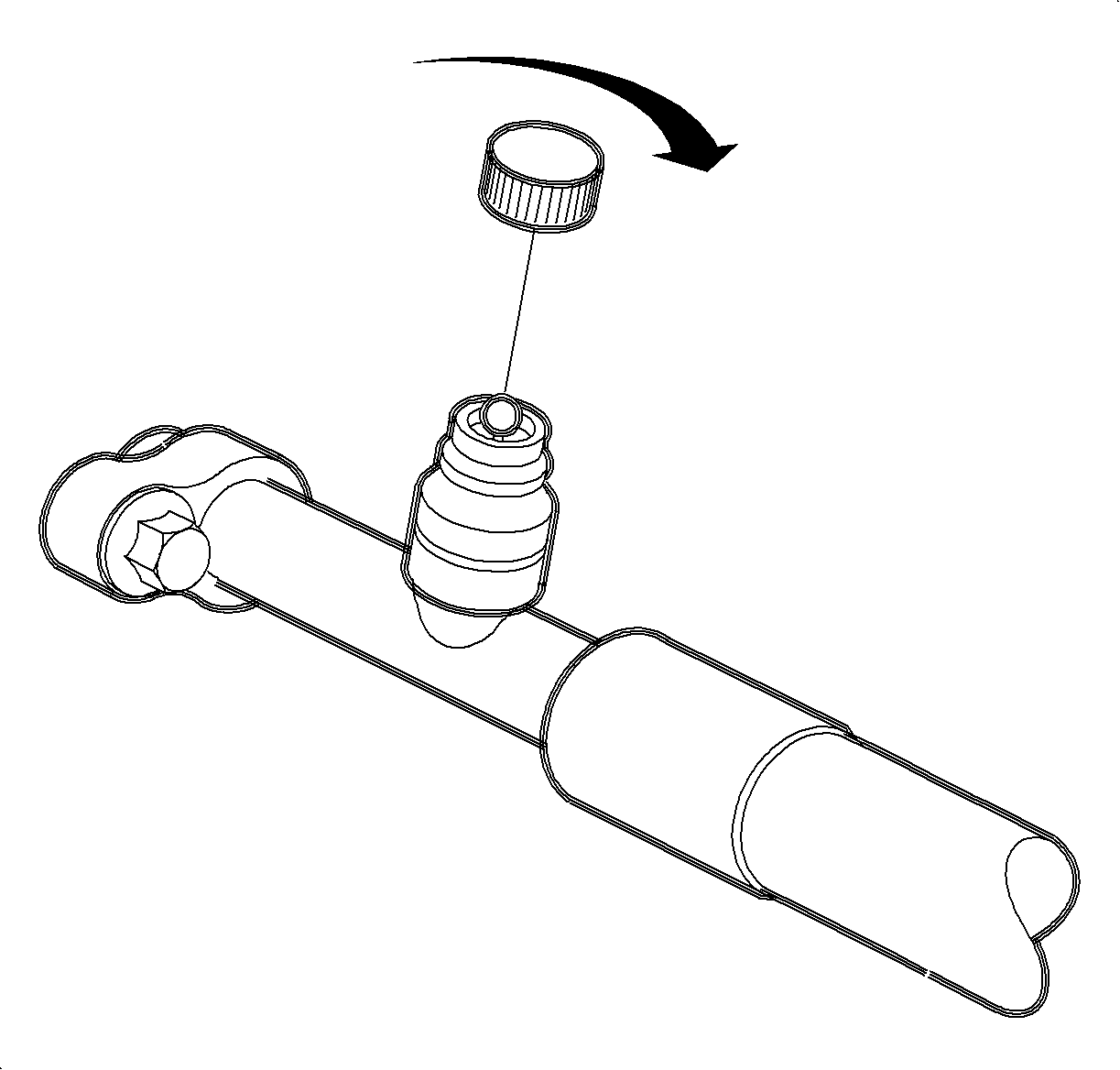
Important
Make sure there is an O-ring seal inside of the caps before installation because
the cap is the primary seal for the A/C service fittings. Failure to tighten the cap
will result in refrigerant leakage.
- Install the protective caps on the service ports and tighten by hand.
- Turn the engine Off.
- Leak check the system with an electronic leak detector or equivalent.
- With the system fully charged and leak-checked, conduct a functional and
performance test.
Refrigerant Drum Method
Important
Refer to the emissions certification label (Saturn Power Module) for proper
amount of R-134a charge.
Important
Verifying the purity of the refrigerant with a refrigerant purity identifier
before charging is recommended.
If the R-134a drum is used, place it on a scale and note the total weight before
charging. Watch the scale during charging to determine the amount of R-134a used.
Connect the manifold gage set as follows:
- The low pressure gage hose to the low pressure service port on the suction
pipe at the rear of the compressor. Do not connect the high pressure line to the A/C
system.
- The manifold gage set center hose connected to the R-134a source.
Charging Station Method
Follow the charging instructions provided with the charging station in use with
the following exceptions:
- Do not connect the high side service valve to the air conditioning system.
- Keep the high pressure valve on the charging station closed at all times.
- Perform the entire charge procedure through the low side pressure service
port on the suction pipe.
- Following these procedures will prevent accidental high side vehicle system
pressure being subjected to the charging station in the event an error is made in
the valve closing sequence during the compressor operation to pull in the R-134a charge.