
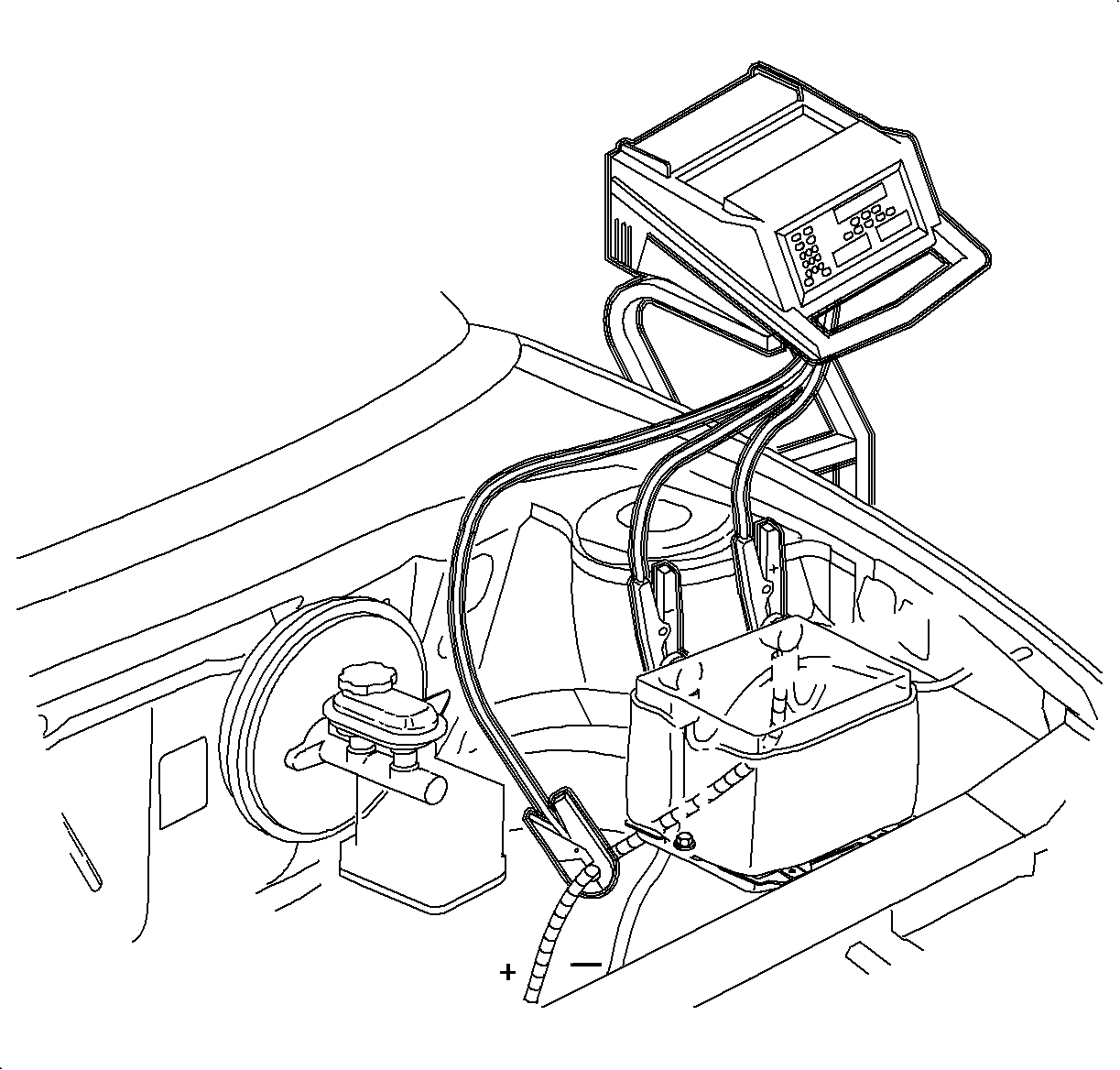
Place the gray inductive current pick-up around the battery positive cable between
the battery positive terminal and the starter motor solenoid connection. The easier
place to connect the inductive pick-up is in front of the brake master cylinder. The
battery positive is covered by a protective wire conduit. This conduit does not need
to be removed from this test.Important
This displays the average amperage drawn by the starter motor during cranking. The following amperage readings are general guidelines for normal operation:
Room Temperature: 5-27°C (40-80°F) | 80-120 amps |
Hot Engine: Coolant above 50°C (120°F) | 70-110 amps |
Cold Engine: 5°C (40°F) | 90-130 amps |
Cold Engine: -20°C (-4°F) | 230-280 amps |
As the ambient temperature decreases, the amperage required to crank
the engine increases.Important
This displays the average battery voltage during cranking. If the voltage is below 9.5 volts, perform the BATTERY TEST to make sure the battery is charged (green eye) and good.
Good cranking voltage and a slow starter cranking speed can be caused by loose or corroded cables.
The starter should not be engaged for more than 15 seconds at a time.
If the vehicle does not start after 15 seconds, turn the ignition key to the
Off position for 20 seconds before attempting to restart the vehicle.Notice
If the display reads BAD STARTER, replace the starter motor only after determining that there is no engine mechanical problems or flywheel binding problems.